Callbacks
Basic Concept of Callbacks
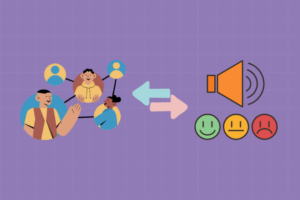
A callback function is a function invoked when a specific event or condition is triggered, commonly used to handle the results of asynchronous operations. In JavaScript, callbacks are the earliest and most fundamental approach to asynchronous programming. They work by passing a function as an argument to another function (typically one performing an asynchronous operation), which is then called upon completion to process the result or handle errors.
Use Cases for Callbacks
Callbacks are widely used in various asynchronous JavaScript scenarios, such as:
- Network Requests: Using
XMLHttpRequestorfetchAPI for Ajax communication, where a callback processes the server response. - Timers:
setTimeoutandsetIntervalaccept callbacks to execute once after a delay or periodically. - Event Listeners: In DOM programming,
addEventListenerregisters callbacks to handle events like clicks or keypresses. - Node.js I/O Operations: In Node.js, nearly all I/O operations (e.g., file reading/writing, network communication) use callbacks to handle asynchronous results.
Typical Structure of Callbacks
A typical callback structure includes success and error handling:
function doAsyncOperation(callback) {
  // Asynchronous operation...
  if (/* success condition */) {
    callback(null, result); // First argument is typically error (null for no error), second is the result
  } else {
    callback(error); // On error, pass only the error object
  }
}

doAsyncOperation(function(err, data) {
  if (err) {
    console.error('An error occurred:', err);
  } else {
    console.log('Async operation succeeded:', data);
  }
});Advantages of Callbacks
- Simplicity: Callbacks are intuitive for simple asynchronous operations, requiring only a function to handle the result.
- Versatility: As the foundational asynchronous mechanism, nearly all async APIs support callbacks.
Disadvantages and Challenges of Callbacks
- Callback Hell: When multiple asynchronous operations depend on each other or require sequential execution, nested callbacks lead to deeply nested, hard-to-read, and difficult-to-maintain code.
doAsyncOperation1(function(err, result1) {
  if (err) return console.error(err);
  doAsyncOperation2(result1, function(err, result2) {
    if (err) return console.error(err);
    doAsyncOperation3(result2, function(err, result3) {
      // ...
    });
  });
});- Scattered Error Handling: Errors are handled in each callback, making centralized error management challenging.
- Lack of Unified Control Flow: Callbacks lack unified control structures like
try...catchor loops, complicating complex async flows.
Strategies to Address Callback Challenges
- Modularization and Middleware: Encapsulate related async operations to reduce global callback nesting. In Node.js, frameworks like Express use middleware to avoid callback hell.
- Promises: Promises improve on callbacks with chaining and error bubbling, mitigating callback hell.
- async/await: Using
asyncfunctions andawaitkeywords, async code can resemble synchronous code, enhancing readability and maintainability.
Event Listeners
Event-Driven Programming and Event Listeners
Event-driven programming is a paradigm where program execution is triggered by external events rather than following a strict sequential order. As a language primarily used for web development, JavaScript naturally adopts event-driven programming, especially in DOM interactions and Node.js server-side programming.
Event listeners are the core mechanism of event-driven programming, allowing programs to register handler functions (event listeners) for specific events. When an event occurs, the corresponding handler is automatically invoked, enabling asynchronous, non-blocking handling of user interactions, system notifications, and more.
DOM Event Model
In browser environments, JavaScript provides a rich event listener system through the DOM API, encompassing:
- Event Types: Such as
click,keydown,load,scroll, representing user interactions or browser behaviors. - Event Target: The specific DOM element where the event occurs, accessible via the event object’s
targetproperty. - Event Propagation: Events propagate through the DOM tree in three phases:
- Capturing Phase: From the root to the target node.
- Target Phase: At the target node.
- Bubbling Phase: From the target back to the root.
- Event Listener Methods:
element.addEventListener(type, listener[, options]): Adds a listener to an element, supporting capture, bubbling, and options like passive events.element.removeEventListener(type, listener[, options]): Removes a previously added listener.
- Event Object: Passed to the handler upon event occurrence, containing details like event type, source, and methods to prevent default behavior.
Role of Event Listeners in Asynchronous Programming
- User Interaction: Listeners for clicks, keypresses, or form submissions enable real-time responses, creating dynamic web experiences.
- Asynchronous Data Loading: Listening for
DOMContentLoadedorloadevents ensures logic executes after the DOM or resources are ready, preventing errors from unready states. - Application State Changes: Custom events (e.g.,
CustomEvent) facilitate component communication or state management (e.g., Redux notifications), enabling asynchronous state updates. - Progress Notifications for Long-Running Tasks: Events like
progressprovide updates for tasks like file uploads or large data processing.
Asynchronous Characteristics of Event Listeners
- Non-Blocking: After registering a listener, the program continues without waiting for the event. When triggered, the event is handled asynchronously via callbacks.
- Decoupling: Event listeners separate event producers from handlers, promoting modular, loosely coupled code.
- Deferred Execution: Handlers execute only when events fire, enabling deferred computation and response.
Best Practices for Event Listeners
- Event Delegation: Leverage event bubbling by attaching listeners to parent elements, checking the event target to handle child events, reducing listener count and improving performance.
- Prevent Memory Leaks: Remove unneeded listeners to avoid memory leaks from lingering references.
- Use Appropriate Event Phases: Choose capturing or bubbling phases based on requirements, or handle both if needed.
- Optimize with Event Modifiers: Use options like
onceorpassiveto enhance performance. - Encapsulate Handlers: Package event logic into standalone functions for cleaner, reusable, and testable code.
Event Listeners in Node.js
Node.js employs an event-driven architecture with its built-in events module, providing the EventEmitter class for creating event emitters and handling events. Libraries like fs, http, and net rely on EventEmitter for async programming. Developers can:
- Create custom
EventEmitterinstances to define and emit custom events. - Use
.on(event, listener)to listen for events. - Use
.emit(event[, ...args])to trigger events and their handlers. - Use
.once(event, listener)for one-time event handling. - Use
.removeListener(event, listener)or.off(event, listener)to remove listeners.
Publish/Subscribe
Concept of Publish/Subscribe
The publish/subscribe pattern is a software design pattern defining decoupled communication between message producers (publishers) and consumers (subscribers). Publishers send messages to a shared channel (topic or channel) without knowing who consumes them, while subscribers register interest in specific topics, receiving notifications when new messages are published.
Applications in JavaScript Asynchronous Programming
The publish/subscribe pattern is widely used in JavaScript async programming, particularly for:
- Cross-Component Communication: In large front-end apps, components share state or messages without direct references, enabling loose coupling.
- State Management Libraries: Libraries like Redux or MobX use publish/subscribe to notify components of state changes, triggering UI updates.
- Async Task Notifications: Long-running tasks (e.g., file uploads, network requests) use publish/subscribe to notify progress, results, or errors.
- Server-Side Push: Technologies like WebSocket or Server-Sent Events (SSE) allow clients to subscribe to real-time server messages.
Implementing Publish/Subscribe
JavaScript supports publish/subscribe through:
- Custom Pub/Sub System: Create a message hub with
subscribe,unsubscribe, andpublishmethods. Subscribers register callbacks for events, and publishers send messages to notify all relevant subscribers.
class PubSub {
  constructor() {
    this.subscriptions = {};
  }

  subscribe(event, callback) {
    if (!this.subscriptions[event]) {
      this.subscriptions[event] = [];
    }
    this.subscriptions[event].push(callback);
  }

  unsubscribe(event, callback) {
    const callbacks = this.subscriptions[event];
    if (callbacks) {
      const index = callbacks.indexOf(callback);
      if (index !== -1) {
        callbacks.splice(index, 1);
      }
    }
  }

  publish(event, data) {
    const callbacks = this.subscriptions[event];
    if (callbacks) {
      callbacks.forEach(callback => callback(data));
    }
  }
}- Existing Libraries: Use
EventEmitter(Node.js),Backbone.Events, orRxJS(Reactive Extensions for JavaScript), which provide robust pub/sub interfaces and additional features.
Advantages of Publish/Subscribe
- Loose Coupling: Publishers and subscribers don’t need direct references, reducing code dependencies.
- Flexibility: Subscribers can dynamically subscribe or unsubscribe, and publishers can add new topics, making the system highly extensible.
- Async-Friendly: The pattern naturally supports asynchronous messaging, aligning with JavaScript’s async nature.
Considerations for Publish/Subscribe
- Memory Management: Unsubscribe when messages are no longer needed to prevent memory leaks.
- Message Synchronization: In multithreaded or distributed systems, consider message ordering or duplicate consumption.
- Performance Optimization: For high-frequency publishing or many subscribers, use message queues, batch processing, or caching.
Comparison with Other Async Methods
Compared to callbacks, Promises, or async/await, publish/subscribe focuses on message passing and event notification, ideal for one-to-many or many-to-many communication. They can be combined to build complex async systems:
- Callbacks, Promises, and
async/awaithandle individual async tasks and results. - Publish/subscribe manages message passing and state changes across components or systems.
Promise
Basic Concept of Promises
A Promise is an object representing the eventual result (or error) of an asynchronous operation. Promises provide a standardized, chainable way to organize async code, addressing the “callback hell” issue of traditional callbacks.
Promises have three states:
- Pending: Initial state, neither fulfilled nor rejected.
- Fulfilled: Operation completed successfully, storing the result.
- Rejected: Operation failed, storing the error reason.
Once settled (fulfilled or rejected), a Promise’s state is immutable.
Promise Constructor and Basic Usage
Promises are created with a constructor that accepts an executor function with resolve and reject parameters to set the Promise’s state:
const promise = new Promise((resolve, reject) => {
  // Async operation...
  if (/* success condition */) {
    resolve(result); // On success, call resolve with result
  } else {
    reject(error); // On failure, call reject with error
  }
});Promise Methods and Chaining
Promises offer methods to handle state changes:
then: Registers callbacks forfulfilled(onFulfilled) andrejected(onRejected) states.
promise.then(
  value => {
    // Handle fulfilled state
  },
  reason => {
    // Handle rejected state
  }
);then returns a new Promise, enabling chaining.
catch: Captures errors from precedingthenchains, equivalent tothen(null, onRejected).
promise.then(
  value => {
    // ...
  }
).catch(reason => {
  // Handle any preceding errors
});finally: Executes a callback regardless of the Promise’s state, useful for cleanup.
promise.then(
  value => {
    // ...
  }
).catch(reason => {
  // ...
}).finally(() => {
  // Always executed
});Advanced Promise Features
Promise.all: Takes an array of Promises, resolving only when all are fulfilled, or rejecting immediately if any reject. Returns an array of results.
Promise.all([promise1, promise2]).then(results => {
  // results = [result1, result2]
});Promise.race: Resolves or rejects based on the first Promise to settle.
Promise.race([promise1, promise2]).then(result => {
  // First resolved Promise’s result
}, reason => {
  // First rejected Promise’s reason
});Promise.resolveandPromise.reject: Create already-fulfilled or rejected Promises for quick results or errors.
const resolvedPromise = Promise.resolve('Success');
const rejectedPromise = Promise.reject(new Error('Failure'));Error Handling in Promises
- Error Propagation: Errors thrown in
thenorcatchcallbacks are caught by the nextcatch. - Final Capture: Use
catchortry...catchinfinallyto ensure all errors are handled.
Relationship with async/await
async/await is syntactic sugar for Promises, enabling synchronous-style async code. async functions return Promises, and await is used within them to pause until a Promise resolves.
async function asyncFunction() {
  try {
    const result = await promise;
    // Handle result
  } catch (error) {
    // Handle error
  }
}Best Practices for Promises
- Avoid unhandled Promises; ensure every Promise has a
catchfor errors. - Use
Promise.allfor parallel execution of independent async tasks. - Use
Promise.racefor timeouts or race conditions. - Avoid
Promise.resolve().then()as asetTimeoutsubstitute, as it may block the event loop.
async/await
async/await is syntactic sugar built on Promises, simplifying async programming by allowing asynchronous code to be written in a synchronous, sequential style.
async Functions
- Definition: Declared with the
asynckeyword,asyncfunctions always return aPromise, resolving to the returned value (orundefinedif none). awaitKeyword: Used only insideasyncfunctions to pause execution until a Promise resolves, yielding the resolved value. If the Promise rejects, an exception is thrown, catchable in atry...catchblock.
async function fetchUser(id) {
  try {
    const response = await fetch(`https://api.example.com/users/${id}`);
    const user = await response.json();
    return user;
  } catch (error) {
    console.error('Error fetching user:', error);
    throw error; // Optional, rethrow for higher-level handling
  }
}

fetchUser(123)
  .then(user => console.log(user))
.catch(error => console.error('Error in fetchUser:', error));- Clarity:
async/awaitmakes async code resemble synchronous code, avoiding callback or Promise chain nesting, improving readability and maintainability. - Error Handling: Uses standard
try...catch, more intuitive than.catch. - Control Flow: Supports native
if,for,whileconstructs for natural async logic.
Generator Functions and Iterators
Generator Functions
- Definition: Declared with an asterisk (
function*), Generator functions return a special iterator object instead of executing the function body directly. yieldKeyword: Pauses execution and returns a value to the iterator’snextmethod caller. The function resumes from the pause point on the nextnextcall.
function* countDown(from) {
  while (from > 0) {
    yield from--;
  }
}

const countdownIterator = countDown(10);
console.log(countdownIterator.next().value); // 10
console.log(countdownIterator.next().value); // 9
// ...Iterators
- Iterator Protocol: An object is an iterator if it implements a
next()method returning an object withvalueanddoneproperties. for...ofLoop: Traverses any object with an iterator interface, including Generator iterators.
for (const number of countDown(5)) {
  console.log(number);
}Generators and Async Programming
Generators don’t natively support async operations but can be combined with Promises via libraries (e.g., co) or yield to execute async operations sequentially:
function* asyncWorkflow() {
  const user = yield getUser();
  const posts = yield getPosts(user.id);
  // ...
}

const iterator = asyncWorkflow();
let result = iterator.next();

while (!result.done) {
  result = iterator.next(result.value);
}However, async/await has largely replaced Generators for async programming due to its simplicity and native support.
Generators vs. async/await
- Syntax Simplicity:
async/awaitis cleaner, eliminating manual iterator andnextmanagement. - Error Handling:
async/awaitusestry...catch, while Generators require libraries or extra logic for async errors. - Native Support:
async/awaitis a built-in feature, whereas Generators need external support for async. - Control Flow: Both support synchronous-like flows, but
async/awaitis more intuitive without additional utilities.