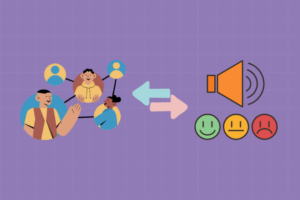
The WebRTC signaling service is responsible for exchanging essential information between WebRTC clients to establish and maintain peer-to-peer (P2P) connections, including session descriptions (SDP) and ICE candidate information. Since the WebRTC specification does not define a signaling mechanism, developers need to implement their own signaling service.
WebRTC Signaling Service and Integration
Setting Up a WebSocket Server
Choosing WebSocket for Signaling
WebSocket is a commonly used signaling mechanism because it provides a full-duplex, low-latency communication channel, making it ideal for real-time communication applications. Other options include HTTP polling, XHR long polling, or proprietary signaling services.
Here, we use the Node.js WebSocket library ws to set up a simple signaling server:
Install the ws library:
npm install wsServer Code (server.js):
const WebSocket = require('ws');

const wss = new WebSocket.Server({ port: 8080 });

wss.on('connection', ws => {
  console.log('Client connected');

  ws.on('message', message => {
    console.log(`Received message => ${message}`);
    wss.clients.forEach(client => {
      if (client !== ws && client.readyState === WebSocket.OPEN) {
        client.send(message);
      }
    });
  });

  ws.on('close', () => {
    console.log('Client disconnected');
  });
});

console.log('WebSocket server is running on port 8080');Client Integration with WebSocket
Next, integrate WebSocket into the WebRTC client to exchange signaling information.
Initialize WebSocket Connection:
const socket = new WebSocket('ws://localhost:8080');

socket.addEventListener('open', () => {
  console.log('WebSocket connected');
});

socket.addEventListener('message', event => {
  handleSignalingMessage(event.data);
});

socket.addEventListener('error', error => {
  console.error('WebSocket error:', error);
});

socket.addEventListener('close', () => {
  console.log('WebSocket disconnected');
});Handling Signaling Messages
On the client side, implement logic to handle received signaling messages and send signaling messages.
Sending SDP Offer:
async function createAndSendOffer(pc) {
  try {
    const offer = await pc.createOffer();
    await pc.setLocalDescription(offer);
    socket.send(JSON.stringify({ type: 'offer', sdp: pc.localDescription }));
  } catch (err) {
    console.error('Error creating offer:', err);
  }
}Handling SDP Answer and ICE Candidates:
function handleSignalingMessage(message) {
  const signalingData = JSON.parse(message);

  switch (signalingData.type) {
    case 'answer':
      peerConnection.setRemoteDescription(new RTCSessionDescription(signalingData.sdp));
      break;
    case 'candidate':
      const candidate = new RTCIceCandidate({
        sdpMLineIndex: signalingData.label,
        candidate: signalingData.candidate
      });
      peerConnection.addIceCandidate(candidate);
      break;
    default:
      console.log('Unknown signaling message:', signalingData);
  }
}Complete Signaling Flow
- Initiator: Creates an RTCPeerConnection, generates, and sends an SDP Offer.
- Receiver: Upon receiving the SDP Offer, creates an RTCPeerConnection, sets the remote description to the received Offer, then generates and sends an SDP Answer.
- Initiator: Upon receiving the SDP Answer, sets the remote description to the received Answer.
- Both sides exchange ICE candidate information via WebSocket during the ICE candidate gathering process.
Error Handling and Reconnection Mechanism
In real-world applications, network fluctuations may cause WebSocket connection interruptions, so implementing error handling and automatic reconnection mechanisms is essential.
Error Handling and Reconnection Example:
let reconnectAttempts = 0;
const MAX_RECONNECT_ATTEMPTS = 5;
const RECONNECT_DELAY = 2000; // 2-second retry interval

socket.addEventListener('error', () => {
  console.error('WebSocket connection error');
  reconnect();
});

socket.addEventListener('close', () => {
  console.log('WebSocket connection closed');
  reconnect();
});

function reconnect() {
  if (reconnectAttempts < MAX_RECONNECT_ATTEMPTS) {
    reconnectAttempts++;
    setTimeout(() => {
      connectWebSocket();
    }, RECONNECT_DELAY);
  } else {
    console.error('Max reconnection attempts reached');
  }
}

function connectWebSocket() {
  socket = new WebSocket('ws://localhost:8080');
  setupSocketListeners(socket);
}

function setupSocketListeners(socket) {
  // Repeat previously defined event listeners
  socket.addEventListener('open', handleOpen);
  socket.addEventListener('message', handleMessage);
  socket.addEventListener('error', handleError);
  socket.addEventListener('close', handleClose);
}Security Considerations
- Use HTTPS and WSS: Ensure WebSocket connections use the encrypted WSS (WebSocket over TLS) protocol to secure signaling data.
- Authentication and Authorization: Implement an authentication process after establishing a WebSocket connection to ensure only verified users can participate in communication.
- Message Encryption: While WebSocket itself is encrypted, additional application-layer encryption can be applied to signaling messages for enhanced security when necessary.
Serialization and Deserialization of Signaling Messages
When sending and receiving messages, objects typically need to be converted to strings (serialization) for transmission and then restored (deserialization) at the receiving end.
Serialization and Deserialization Example:
// Serialize before sending
function sendMessage(message) {
  socket.send(JSON.stringify(message));
}

// Deserialize after receiving
function handleMessage(event) {
  const message = JSON.parse(event.data);
  // Process the message
}Advanced Features: Extending and Optimizing the Signaling Server
- Load Balancing: As the number of users grows, a single WebSocket server may not handle all connections, necessitating a load balancer to distribute connections across multiple servers.
- Persistent Connections: To improve efficiency, design the signaling server to support long-lived connections, reducing handshake and connection establishment overhead.
- Message Queues: In high-concurrency scenarios, using message queues can effectively handle large volumes of signaling messages, ensuring orderly processing and system stability.
Ensuring Reliability of Signaling Messages
Although WebSocket provides relatively reliable connections, message loss or out-of-order delivery can still occur in complex network environments. To ensure signaling reliability, the following strategies can be employed:
Message Acknowledgment Mechanism
For critical signaling messages, implement a simple acknowledgment mechanism. The sender waits for the receiver’s acknowledgment after sending a message, resending if no acknowledgment is received within a certain time.
function sendMessageWithAck(message, callback) {
  let retries = 3;
  const messageId = generateUniqueId(); // Generate unique ID to track the message
  message.ackId = messageId;

  const sendMessageAndRetry = () => {
    sendMessage(message);
    setTimeout(() => {
      if (--retries <= 0) {
        console.error(`Message ${messageId} failed to be acknowledged`);
        return;
      }
      if (!messageAcknowledged[messageId]) {
        sendMessageAndRetry();
      }
    }, RETRY_TIMEOUT);
  };

  sendMessageAndRetry();
}

socket.addEventListener('message', event => {
  const message = JSON.parse(event.data);
  if (message.ackId) {
    messageAcknowledged[message.ackId] = true;
    socket.send(JSON.stringify({ type: 'ack', ackId: message.ackId }));
  }
  // Other message handling logic...
});Using Sequence Numbers to Manage Message Order
Assign an incrementing sequence number to each sent message. The receiver sorts messages based on sequence numbers to ensure correct processing order, mitigating issues caused by network out-of-order delivery.
Supporting Many-to-Many Communication
For applications requiring many-to-many communication, the signaling server must manage multiple connections and broadcast or direct messages to specific clients.
// Assume a mapping table stores room IDs and their associated clients
const rooms = {};

function joinRoom(roomId, ws) {
  if (!rooms[roomId]) {
    rooms[roomId] = [];
  }
  rooms[roomId].push(ws);
}

function leaveRoom(roomId, ws) {
  if (rooms[roomId]) {
    rooms[roomId] = rooms[roomId].filter(socket => socket !== ws);
    if (rooms[roomId].length === 0) {
      delete rooms[roomId];
    }
  }
}

function broadcastToRoom(roomId, message) {
  if (rooms[roomId]) {
    rooms[roomId].forEach(socket => {
      if (socket.readyState === WebSocket.OPEN) {
        socket.send(JSON.stringify(message));
      }
    });
  }
}Performance Monitoring and Logging
To continuously optimize and maintain the signaling service, integrating performance monitoring and logging is essential. This includes logging connection establishment times, message processing delays, error rates, and system resource usage.
// Use a logging library like winston for logging
const winston = require('winston');

const logger = winston.createLogger({
  level: 'info',
  transports: [
    new winston.transports.Console(),
    new winston.transports.File({ filename: 'logs/server.log' })
  ]
});

// Log connection events
wss.on('connection', ws => {
  logger.info('New WebSocket connection');
});

// Log errors
socket.addEventListener('error', error => {
  logger.error('WebSocket error:', error);
});By employing the above strategies and techniques, developers can build a reliable and efficient WebRTC signaling service. Continuous monitoring, testing, and optimization are key to maintaining service quality and user experience. As technology evolves, exploring and adopting new solutions, such as alternatives to WebSocket (e.g., Socket.IO, QUIC), is crucial for enhancing the competitiveness of WebRTC applications.